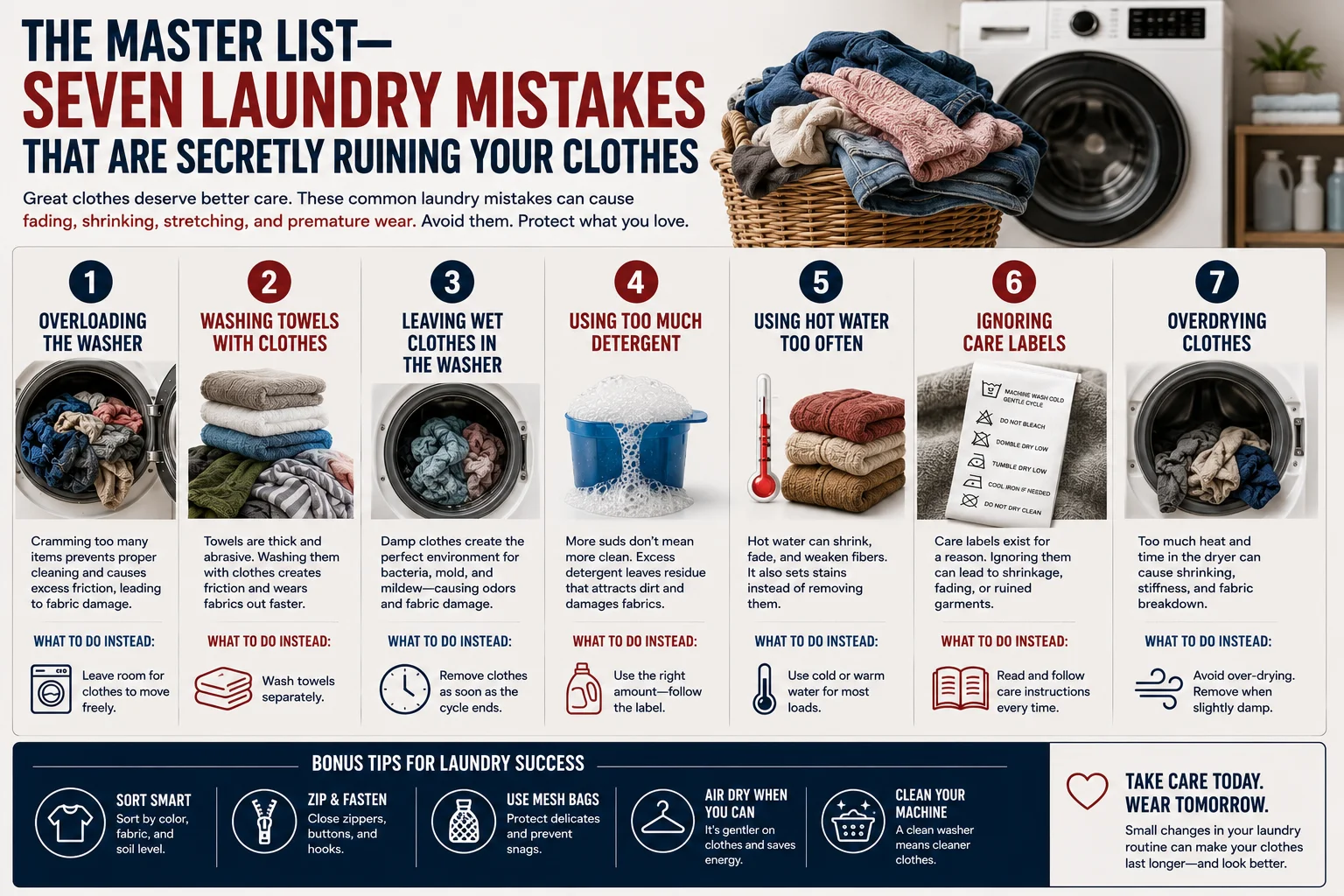
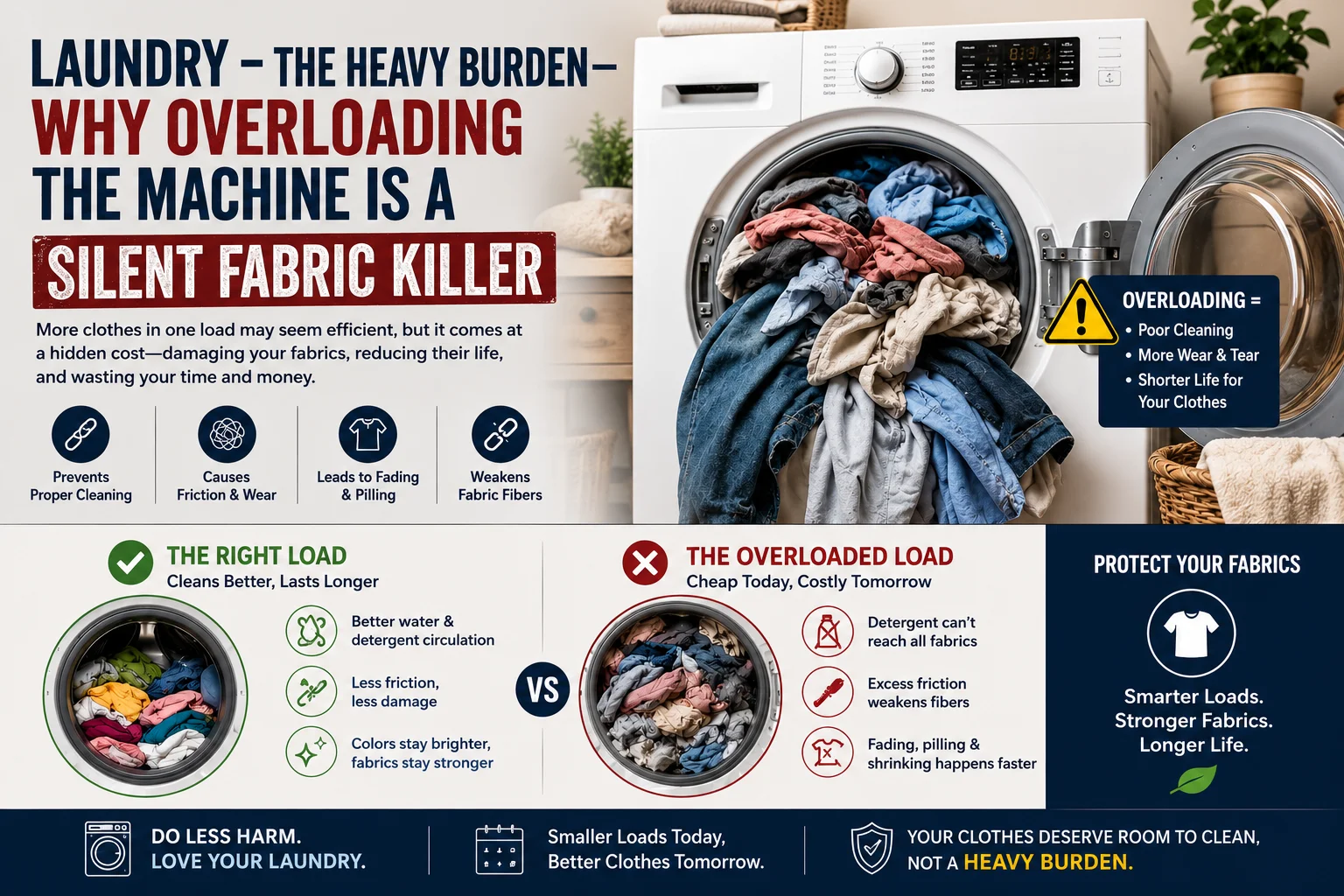
We have all been there. It’s Sunday night, the laundry basket is overflowing, and the temptation to shove “just one more” pair of jeans into the drum feels impossible to resist. It feels like a productivity win—saving time, saving water, and clearing the floor in one go. However, this apparent efficiency acts as a silent fabric killer, creating slow-motion disaster for both your wardrobe and your wallet. Overloading ranks among the mistakes people make in the laundry room, and the consequences go far beyond a few wrinkles.
The Physics of the “Tumble”
To understand why overloading destroys fabrics, we need to look at the mechanics of how a washing machine actually cleans. Unlike a dishwasher, which sprays high-pressure water at stationary objects, a washing machine relies on mechanical action and inter-fabric friction.
In a front-loading machine, the drum lifts the clothes and drops them into the water below. In a top-loading machine, the agitator or impeller moves the clothes in a circular or vertical motion.
This process requires a specific ratio of water to fabric. When people pack the machine to the brim, the clothes form a singular, compressed mass. The clothes no longer “tumble” properly. Instead of scrubbing against moving water, the garments sit in a hot, damp knot. Without enough kinetic energy, the machine cannot pull dirt, skin cells, and oils out of the fibers effectively.
The “Dry Spot” Phenomenon and Detergent Failure
Have you ever pulled a load out of the washer only to find that certain items in the center are still partially dry? Or perhaps you’ve seen white streaks of undissolved detergent on your dark slacks? This is a direct result of overloading. When the drum is too full, water cannot penetrate the core of the laundry bundle.
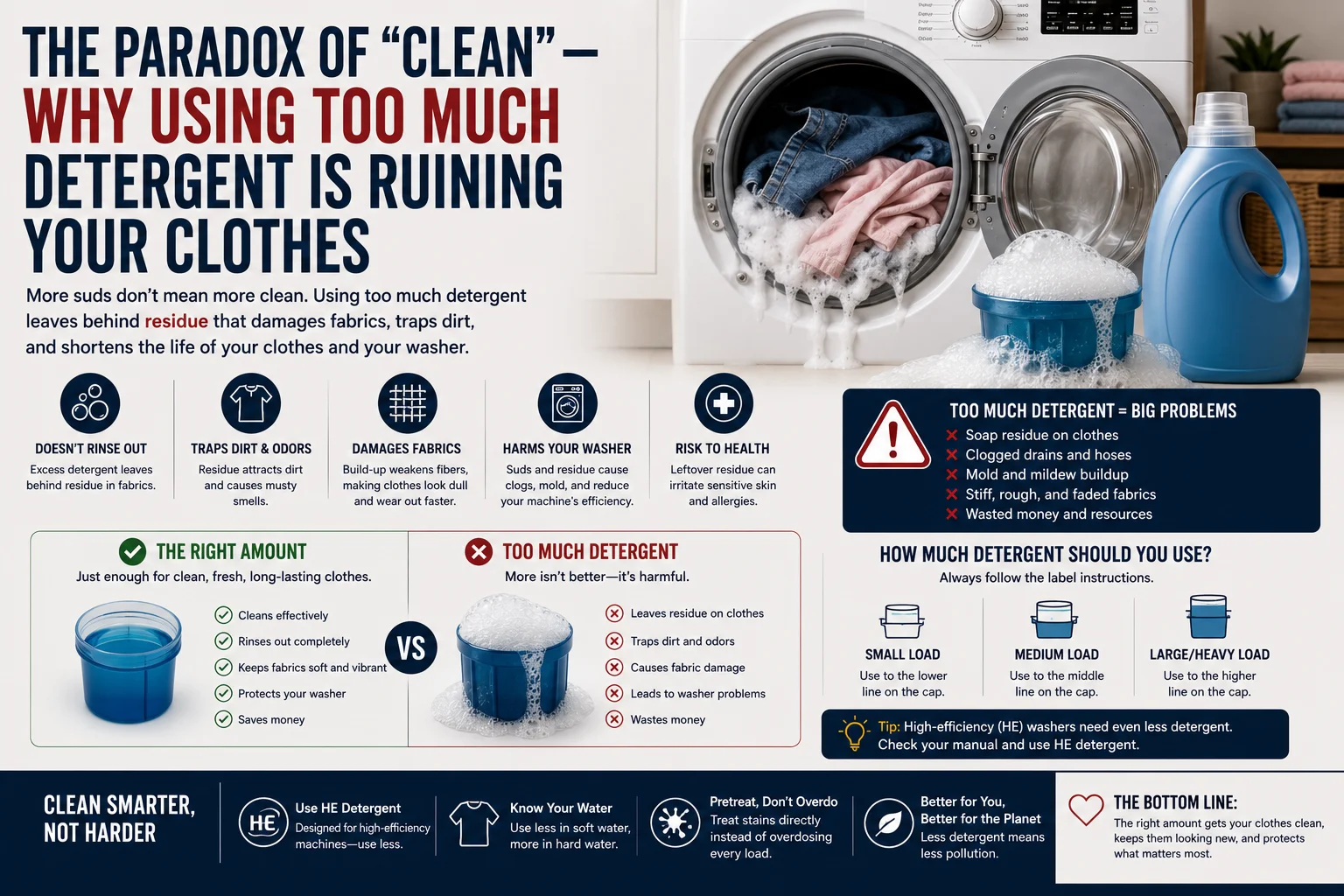
Detergent needs space to dissolve and emulsify. If the soap is trapped between layers of tightly packed fabric, it can’t reach the soil. Instead, it creates a concentrated chemical “hot spot” that can actually bleach or weaken the fibers of the clothes it’s stuck to, while leaving the rest of the load essentially unwashed. You end up with clothes that smell “fresh” because of the fragrance, but are still biologically dirty.
The Mechanical Toll: Killing Your Machine
The damage isn’t limited to your shirts. Overloading puts immense physical strain on the appliance. Modern washing machines are precision-engineered to handle specific weight capacities. When you exceed that weight—especially when the clothes become water-logged—the strain on the drive belt, motor, and bearings becomes exponential.
When an overloaded machine enters the high-speed spin cycle, it often becomes “unbalanced.” This leads to that violent “walking” or thumping sound. Every time the machine thumps, it is wearing down its shock absorbers and putting stress on the inner drum’s alignment. A machine that is consistently overloaded will have a lifespan 30-50% shorter than one treated with respect.
The Solution: The “Rule of Palm”
So, how do you know when to stop? A good rule of thumb—literally—is the Rule of Palm. You should be able to fit your hand comfortably into the top of the drum without forcing it. If you have to push the clothes down to make room for your hand, you’ve gone too far. Aim for the drum to be about two-thirds full. This provides the perfect “drop zone” for clothes to tumble and ensures that every fiber is saturated with the cleaning power it deserves.