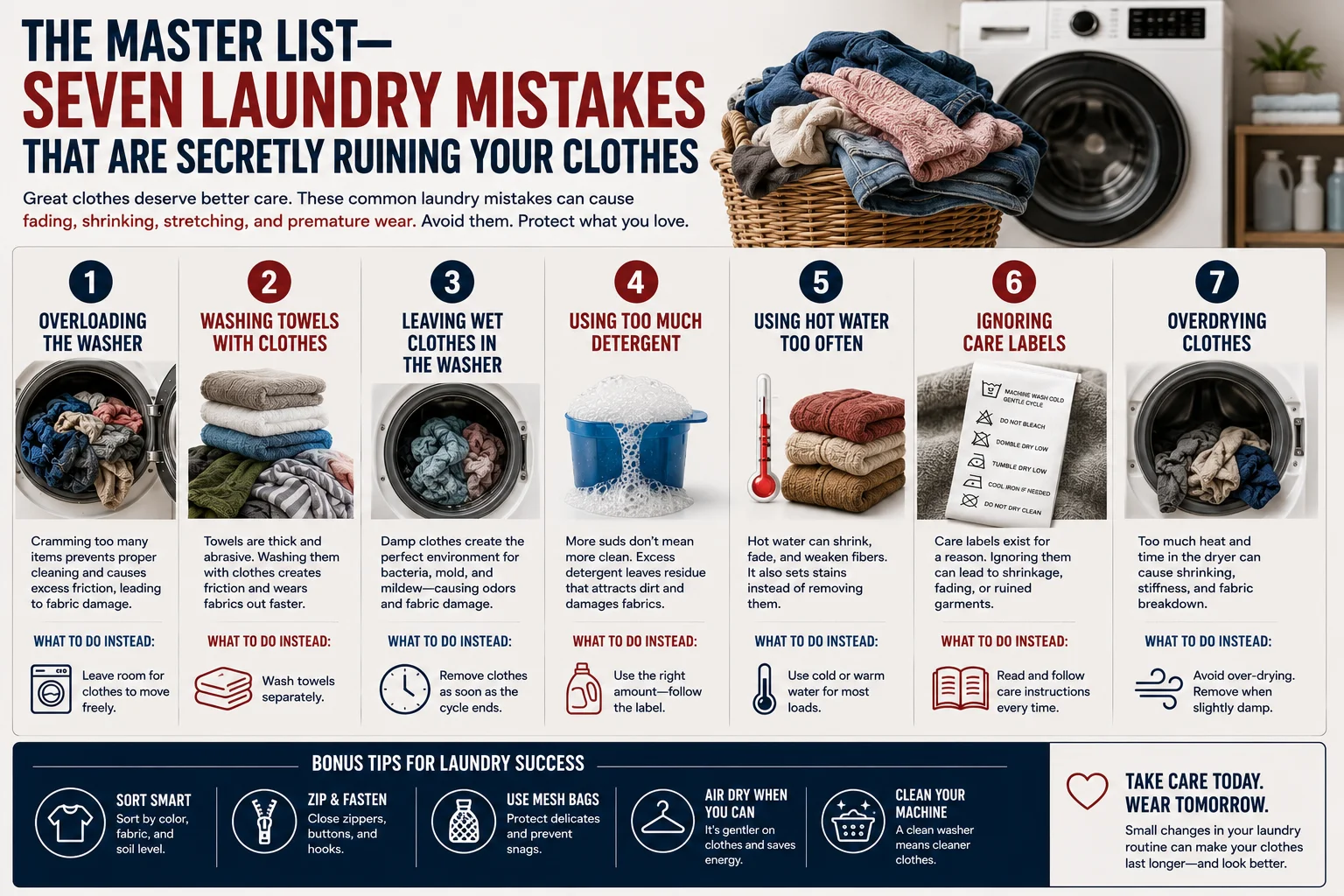
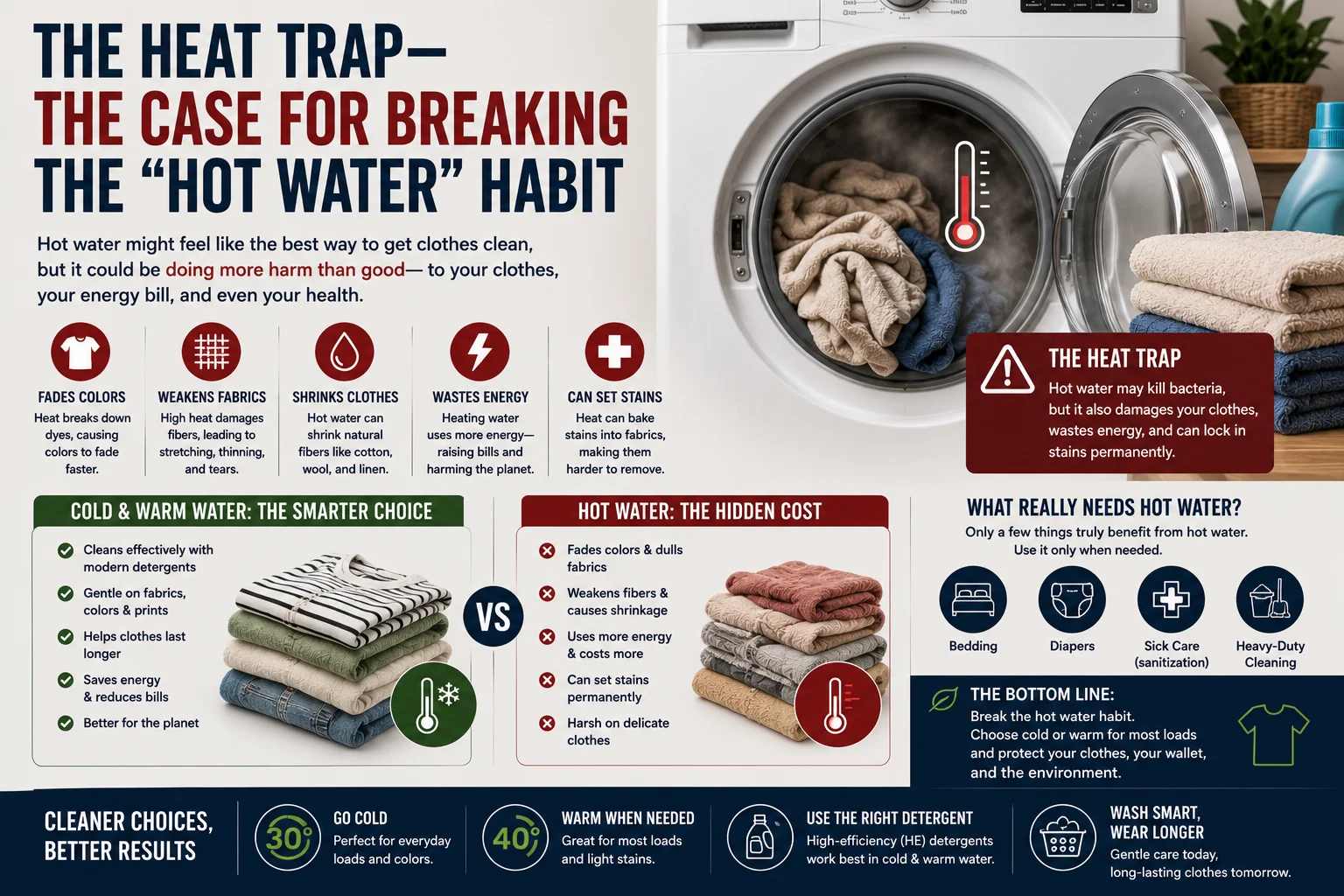
For generations, the gold standard for laundry was “the hotter, the better.” Hot water was seen as the only way to kill germs and strip away grease. While that may have been true when we were using washboards and lye soap, today’s laundry landscape has changed. Between advanced textile engineering and enzyme-based detergents, breaking the hot water habit has become more of a liability than an asset.
The Elasticity Killer
Most modern clothing—from your daily jeans to your high-performance gym gear—contains synthetic fibers like spandex, Lycra, or elastane. These fibers are essentially plastics. When they are subjected to high heat in the wash, they undergo a process called thermal degradation.
Hot water causes elastic fibers to lose their “memory.” As a result, favorite leggings start sagging at the knees and jeans lose their shape within months. Once elasticity disappears, no process can restore it. By switching to cold or warm water, you protect the structural integrity of these fibers and help clothes maintain their original fit much longer.
The “Setting” of Stains
One of the biggest laundry myths is that hot water removes stains more effectively. In reality, hot water often “cooks”
common stains directly into the fabric. Protein-based stains—such as blood, sweat, milk, or grass—bond permanently to fibers after exposure to high heat. Once heat sets a stain, removing it becomes extremely difficult without damaging the garment.
Cold water, paired with modern detergents, actually lifts many stains more effectively. Today’s detergents contain specialized enzymes that activate at lower temperatures and break down organic matter without harming the fabric itself.
The Environmental and Financial Payoff
Beyond the health of your clothes, there is the health of your wallet. Approximately 90% of the energy used by a washing machine is dedicated solely to heating the water. By switching to cold water, you are significantly reducing your household’s carbon footprint and lowering your monthly utility bills. In a world where we are all looking for ways to be more sustainable, the “Cold Water Wash” is the easiest, most impactful change you can make in your daily routine.