1. Your Clothes Sat Wet for Too Long
One of the easiest ways for freshly washed laundry to develop an unpleasant smell is leaving it wet for an extended period. If clothes sit inside the washer after the cycle finishes, they remain warm and damp in an enclosed environment. That creates conditions where unpleasant odors can develop.
This is especially common when a load is started before work, forgotten during a busy day, or left overnight.
What to do: Move laundry to the dryer as soon as reasonably possible after the wash cycle ends. If a load has already developed a noticeable odor, washing it again may be necessary rather than simply drying it.
2. Your Washing Machine May Need Cleaning
Sometimes the clothes aren’t the source of the smell. Detergent residue, fabric softener, body oils, dirt, and moisture can accumulate inside a washing machine over time. Areas that stay damp—such as seals, dispensers, and other hidden parts—can become a source of musty odors.
That means your washer can transfer an unpleasant smell back onto clothes that were just washed.
What to do: Follow the manufacturer’s cleaning instructions and pay attention to areas that remain damp between loads. Keep the door or lid open when appropriate so the interior can dry. Regular machine maintenance is particularly important if you wash frequently.
3. You’re Using Too Much Detergent
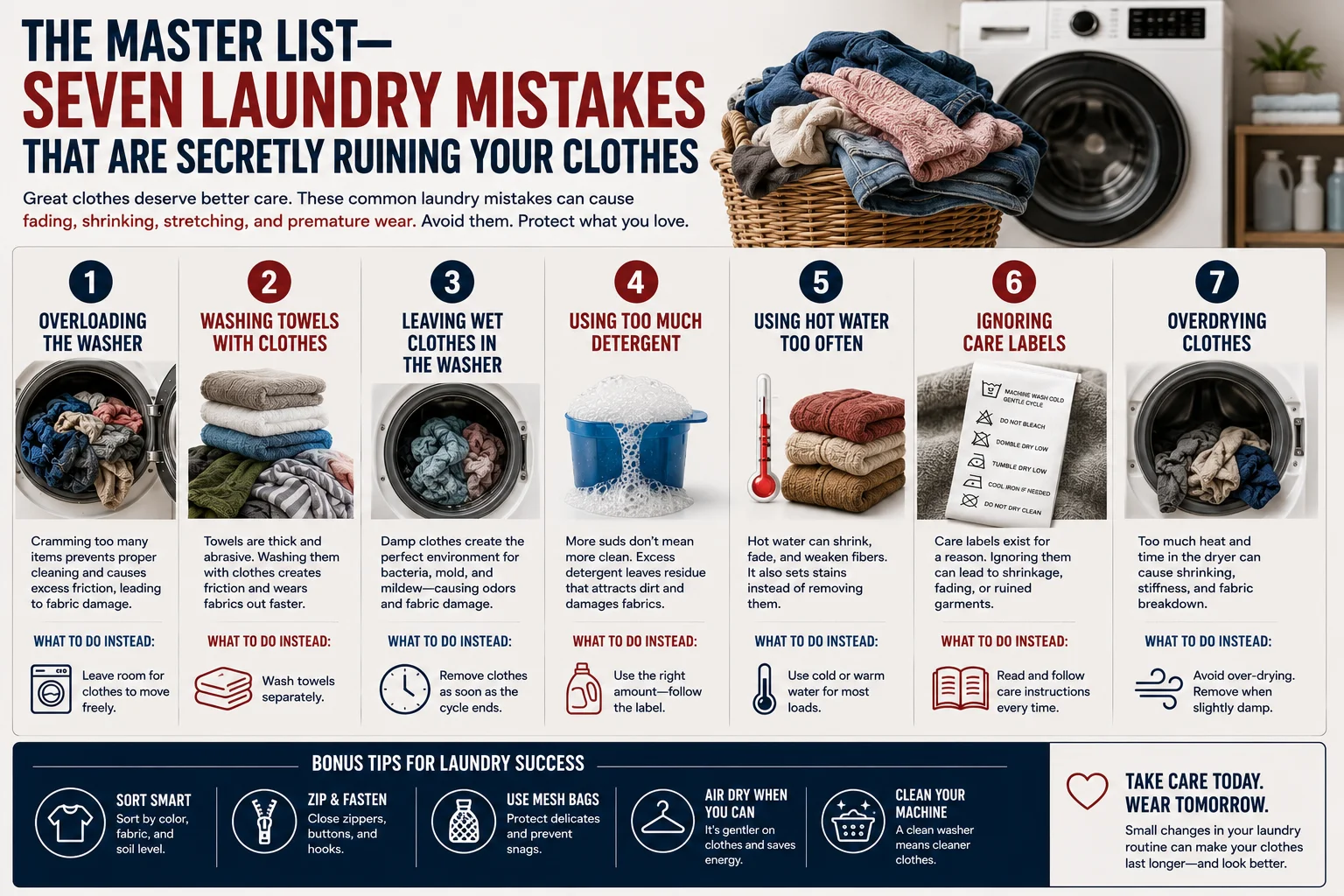
More detergent doesn’t necessarily mean cleaner clothes. In fact, excessive detergent can leave residue behind, particularly when a machine doesn’t have enough water to rinse away the excess.
That residue can accumulate on fabric and contribute to stiffness, dullness, and unpleasant odors.
Rise N Rinse has previously covered the problem of excessive detergent in greater detail, including how detergent buildup can affect both clothing and washing machines.
What to do: Follow the detergent manufacturer’s recommended amount and consider the size and soil level of the load rather than automatically adding more soap.
If clothes feel coated, stiff, or unusually soapy after washing, excess detergent could be part of the problem.
4. The Washer Is Too Full
A washing machine needs enough room for water and detergent to move through the load effectively. When clothes are packed too tightly, they may not move freely during the wash and rinse cycles.
Some areas of the fabric may not receive enough water or mechanical action, while dirt and odor can remain trapped in heavier garments. An overloaded washer can also make drying more difficult later.
What to do: Give clothes enough room to move. Large or bulky items should generally have more space than a normal everyday clothing load.
If you’re regularly dealing with comforters, blankets, or large household loads, a larger-capacity commercial washer can be a more practical option than forcing everything into a residential machine.
5. The Clothes Aren’t Drying Completely
Clean clothes should be completely dry before they are folded and stored. Even a small amount of remaining moisture can become a problem when clothing is placed in a drawer, basket, or closet without enough airflow.
This is particularly important for thick towels, sweatshirts, denim, and other heavy fabrics that can feel dry on the outside while retaining moisture deeper inside.
What to do: Check thicker items carefully before folding them. If something still feels damp, give it additional drying time rather than putting it away.
If you’re repeatedly struggling to dry large loads at home, a laundromat with larger commercial dryers may provide a more practical solution.
6. Certain Fabrics Hold Odor More Easily
Not all fabrics behave the same way in the wash. Workout clothing and synthetic performance fabrics can retain body oils and odor even when they look clean.
Thick materials can also take longer to dry and may hold moisture deeper in the fabric. Simply adding more detergent isn’t always the answer.
What to do: Check the care instructions for the garment and use an appropriate wash cycle. Avoid automatically treating every fabric the same way.
For persistent odor, pay attention to the fabric itself, how heavily it is worn, and whether it is being washed and dried appropriately.
7. Heavily Soiled Laundry Needs More Attention
A regular everyday load and a load containing heavily sweaty workout clothes, kitchen towels, or visibly soiled items don’t necessarily need the same approach.
When a load contains a high amount of body oils, food residue, dirt, or other soils, the normal wash routine may not completely address the problem. This doesn’t mean you should simply keep adding detergent.
What to do: Separate heavily soiled items when appropriate and follow the garment’s care instructions. Pretreat suitable stains or problem areas when recommended.
The goal is to match the laundry process to the type of soil rather than assuming every load should be handled identically.
8. The Water Temperature May Not Suit the Laundry
Temperature can affect how effectively a load is cleaned, but hotter isn’t automatically better.
Some fabrics require cooler water to protect their shape, color, or fibers. Other laundry may benefit from a warmer setting when the care label allows it.
Using the wrong temperature can leave you with laundry that looks clean but still has an underlying odor, or it can damage clothing if the setting is too aggressive.
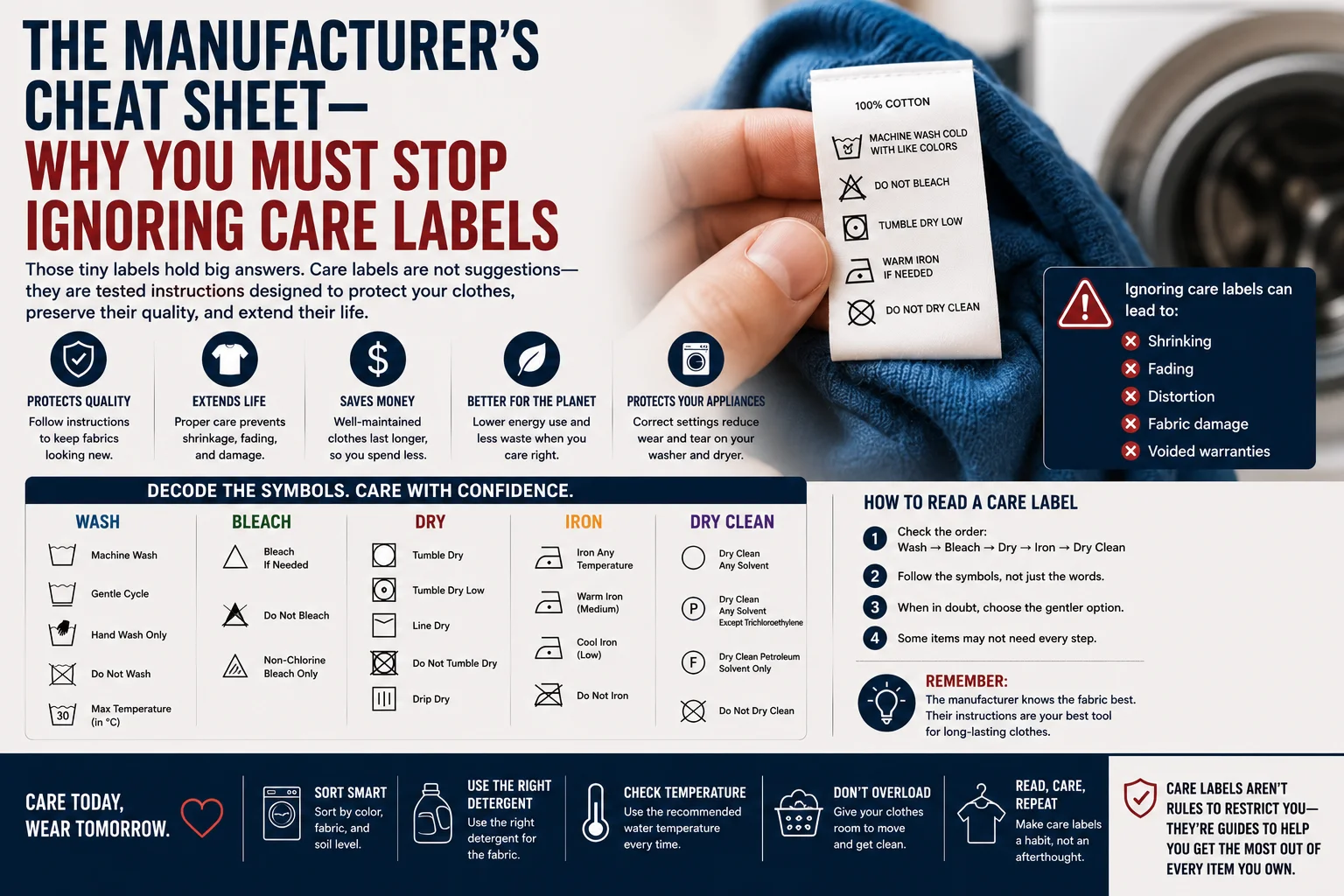
What to do: Check garment care labels and select a cycle and temperature appropriate for the load. If you’re unsure, don’t assume that the hottest possible setting is the best choice.
9. The Odor Is Coming Back After Washing
Sometimes clothes smell fresh immediately after washing and drying but develop an odor again later.
That can point to a different problem.
The source could be incomplete drying, residue in the fabric, storage in a humid environment, or an odor that wasn’t completely removed during washing in the first place.
Pay attention to when the smell returns.
If it appears immediately after washing, investigate the washing process. If it develops after several hours in a closet or drawer, look at drying and storage conditions as well.
What to do: Track when the odor appears instead of repeatedly rewashing the same clothes without changing anything else.
That small distinction can help identify whether the problem is the washer, wash cycle, drying process, fabric, or storage environment.
What Should You Do If Your Clothes Still Smell After Washing?
If the problem keeps happening, don’t immediately run the same load through another cycle with more detergent. Work through the process:
- Step 1: Check whether the laundry sat wet after washing.
- Step 2: Check whether the washer itself has an odor.
- Step 3: Look for detergent or fabric-softener buildup.
- Step 4: Consider whether the load was too large.
- Step 5: Make sure thick items are completely dry.
- Step 6: Identify whether particular fabrics are repeatedly holding odor.
- Step 7: Consider whether heavily soiled items need a different approach.
This troubleshooting approach is more useful than simply washing the clothes again and hoping the smell disappears.
Should You Wash the Load at Home or Use a Laundromat?
If persistent odors are happening because your home machine is too small, your loads are consistently overcrowded, or large items aren’t drying properly, using commercial laundry equipment can make sense.
| Situation | Home Laundry | Self-Service Laundromat | Wash & Fold |
|---|---|---|---|
| Small everyday loads | Good fit | Usually unnecessary | Optional |
| Large loads | May require multiple cycles | Often more practical | Convenient |
| Comforters and bulky items | Can be difficult | Better suited to large machines | Convenient |
| You’re short on time | Less convenient | Requires your time | Strong option |
| You want to handle laundry yourself | Best fit | Strong option | Not the priority |
| You don’t want to handle washing and folding | Not ideal | Not ideal | Strong option |
The right choice depends on why your laundry routine isn’t working.
If equipment capacity is the problem, a self-service laundromat may solve it. If the issue is time and workload, Wash & Fold or pickup and delivery may make more sense.
When Is It Time to Change Your Laundry Routine?
Persistent odor is often a sign that something in the process needs attention, not necessarily that your clothes are permanently damaged.
If you’re repeatedly dealing with damp laundry, overloaded machines, large loads, or clothing that doesn’t dry properly, changing the way you handle laundry may be more effective than repeating the same wash cycle.
For some households, that could mean using a larger machine for bulky loads. For others, it may mean outsourcing part of the laundry routine through Wash & Fold or pickup and delivery.
The best solution is the one that addresses the actual problem.
Frequently Asked Questions for Reasons Your Clothes Still Smell After Washing
1. Why do my clothes smell bad even after washing?
Common causes include leaving clothes wet for too long, an unclean washing machine, excess detergent, overloaded loads, incomplete drying, and odor trapped in certain fabrics.
2. Why do my clothes smell musty after washing?
Musty odors are often associated with prolonged moisture. Check whether the clothes sat wet in the washer, whether they dried completely, and whether the washing machine itself has a musty smell.
3. Does using more detergent make clothes smell better?
Not necessarily. Excess detergent can leave residue on fabrics and may contribute to unpleasant odors. Using the appropriate amount is generally better than assuming more detergent means cleaner laundry.
4. Why do towels smell even after washing?
Towels are thick and highly absorbent, so they can retain moisture and residue more easily than lightweight clothing. Incomplete drying and detergent buildup can contribute to persistent odor.
5. Why do workout clothes still smell after washing?
Synthetic athletic fabrics can retain body oils and odors. Proper washing, appropriate detergent use, and complete drying are important, but heavily worn performance clothing may require more careful handling than ordinary cotton garments.
6. Should I wash smelly clothes again?
If clothes have developed an odor, rewashing may help—but first identify why they smell. If the underlying issue is an overloaded washer, dirty machine, excess detergent, or incomplete drying, repeating the same process may not solve it.
7. Can a laundromat help if my clothes aren’t getting completely clean?
A laundromat with larger commercial machines can be useful when your home washer is too small for the size of your loads. Larger equipment can provide more room for bulky items and larger laundry loads.
Final Takeaway of Reasons Your Clothes Still Smell After Washing
When clothes still smell after washing, the answer isn’t always “wash them again.”
Look at the entire laundry process—from how full the washer is and how much detergent you’re using to how quickly clothes are dried and where they’re stored afterward.
Once you identify the source of the odor, the solution usually becomes much clearer.
And if the problem is really about limited machine capacity, large loads, or simply not having enough time for laundry, changing your laundry method may be the better answer.
Rise N Rinse offers self-service laundry, Wash & Fold, and pickup and delivery options for different laundry needs, so you can choose the approach that fits the problem you’re actually trying to solve.