1. Wool Sweaters and Wool Garments
Wool is one of the materials most likely to react badly to heat and aggressive tumbling. A wool sweater that goes through a hot dryer can shrink, become misshapen or develop a denser, felted texture. Once significant shrinkage occurs, restoring the original shape may not be possible.
What to do instead: Check the care label. Many wool garments are best dried flat after washing. Reshape the garment while it is damp and allow it to dry according to the manufacturer’s instructions. Don’t assume that using a shorter dryer cycle makes wool automatically safe.
2. Silk Clothing
Silk is lightweight and delicate, and excessive heat can affect both its shape and appearance. Items such as silk blouses, scarves and delicate silk garments may be damaged by tumble drying even when the dryer is set to a lower temperature. What to do instead: Follow the garment’s care label. If air drying is recommended, keep the item away from harsh direct heat and reshape it carefully while drying. Silk is a good example of why “it only needs a few minutes in the dryer” isn’t necessarily a safe approach.
3. Lace and Delicate Lingerie
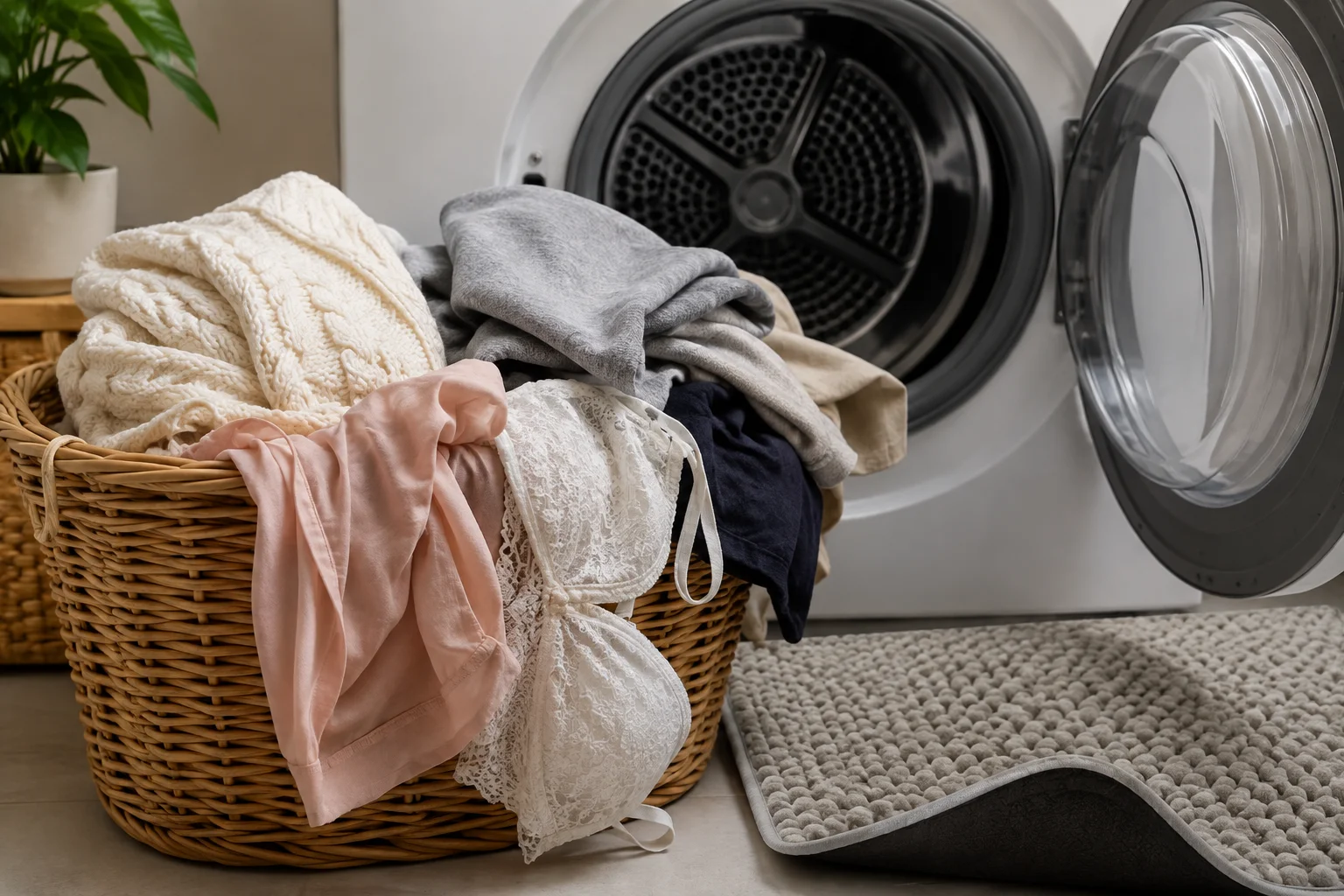
Lace, fine mesh and delicate lingerie can lose their shape when exposed to repeated heat and tumbling. The problem isn’t always immediate. An item may survive one dryer cycle but gradually develop stretched elastic, weakened fabric or distorted details. What to do instead: Use the drying method specified on the care label. For delicate items that permit machine washing but not tumble drying, air drying is generally the safer route. A mesh laundry bag can also help protect delicate items during washing, although it does not make a non-dryer-safe garment suitable for the dryer.
4. Rubber-Backed Bath Mats
Rubber-backed mats can be especially problematic in a dryer. Heat may cause the rubber backing to deteriorate, crack, peel or become brittle. Once the backing starts breaking down, the mat may no longer provide the same grip. What to do instead: Check the manufacturer’s instructions and use the recommended air-drying method when tumble drying isn’t permitted. Also inspect older mats periodically. If the backing is already cracking or peeling, replacing the item may be safer than continuing to wash and dry it.
5. Clothes With Elastic
Elastic is found in many everyday garments, including underwear, waistbands, swimwear and fitted athletic clothing. Repeated exposure to high heat can cause elastic fibers to lose their stretch over time. That doesn’t necessarily mean every garment containing elastic must be air-dried. The important point is to follow the garment’s specific care instructions and avoid assuming that high heat is harmless. What to do instead: If the label recommends low heat or air drying, follow that instruction. Lower temperatures can be a better choice for dryer-safe garments that contain elastic.
6. Foam-Containing Items
Foam can be sensitive to heat and may deform or deteriorate depending on the material. This can apply to certain padded items, foam-backed accessories and household products with internal foam components. What to do instead: Check the manufacturer’s instructions before putting the item in a dryer. If tumble drying isn’t recommended, allow it to air dry using the method specified. If you’re unsure what material is inside an item, don’t rely on appearance alone. Check the care label or product instructions.
7. Garments With Decorative Details
Clothing with sequins, glued decorations, printed embellishments, beads or specialty trims deserves extra attention. Heat can affect adhesives, while tumbling can cause decorations to snag, loosen or become damaged. A garment can be technically washable while still requiring a different drying method. What to do instead: Turn suitable garments inside out before washing and follow the care label for drying. If the label says to air dry, don’t use a dryer simply to save a few minutes.
8. Structured or Shaped Garments
Some clothing is designed to maintain a particular shape. This can include structured bras, tailored garments and certain fitted clothing. Heat and tumbling can affect the shape of the garment, particularly when it contains moulded cups, structured panels or materials that don’t respond well to heat. What to do instead: Use the drying method recommended by the manufacturer. For structured garments that require air drying, reshape them carefully and avoid hanging them in a way that could stretch the material.
9. Shoes and Items with Adhesives
Some washable shoes, slippers and accessories contain adhesives, foam or synthetic components that may not tolerate dryer heat. Heat can affect adhesives and change the shape or structure of the item. What to do instead: Follow the manufacturer’s cleaning instructions. If the item needs to air dry, allow it to dry naturally in a well-ventilated area. Avoid using a dryer as a shortcut unless the manufacturer specifically says the item is dryer-safe.
10. Anything Marked “Do Not Tumble Dry”
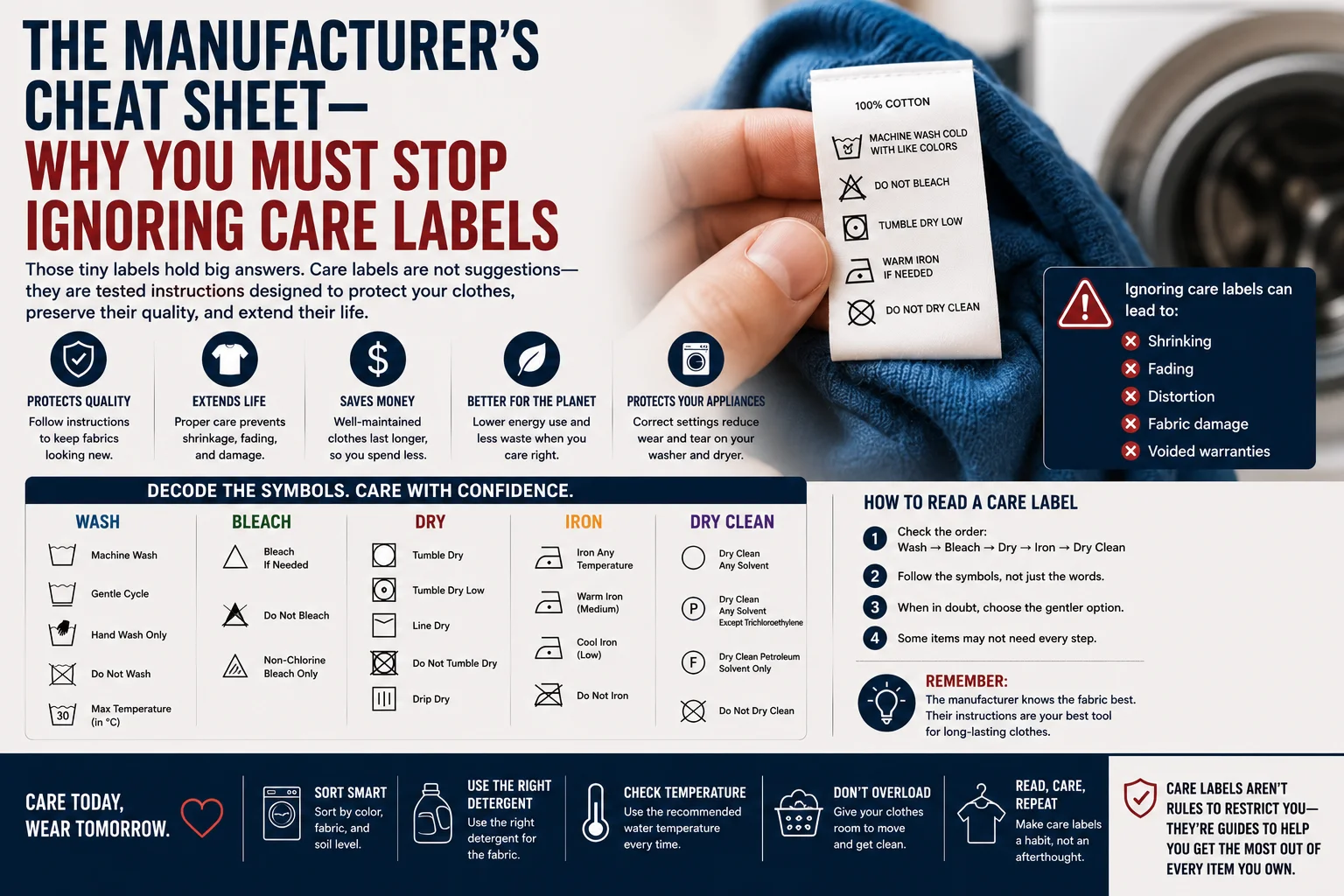
This is the simplest rule and the one people sometimes ignore. If the care label shows a square with a circle crossed out, the garment should not be tumble dried. It doesn’t matter whether you’ve successfully dried a similar garment before. Different materials, finishes and construction methods can respond differently to heat. What to do instead: Follow the recommended drying method on the label. That may mean line drying, laying the item flat or using another method specified by the manufacturer. When in doubt, the care label is more reliable than a general internet laundry rule.
What About Items That Are Dryer-Safe but Need Low Heat?
Not everything that shouldn’t go on high heat needs to stay completely out of the dryer. Many garments are designed for tumble drying at a specific temperature. The key is understanding the difference between:
- Do not tumble dry: The item should not go in a tumble dryer.
- Tumble dry low: The item can be tumble dried, but at a lower temperature.
- Tumble dry medium: A moderate dryer temperature is appropriate.
- Tumble dry high: The garment can tolerate a higher drying temperature according to its care instructions.
This distinction matters because using the wrong temperature can damage clothing even when the garment itself is technically dryer-safe.
What Should You Do with a Mixed Laundry Load?
A common laundry problem is having one load containing items with completely different drying requirements. For example, you might have:
- Cotton towels
- Everyday T-shirts
- Athletic clothing
- Delicate underwear
- A wool sweater
Putting everything into the same dryer cycle is convenient, but it may not be the best approach.
Instead, separate items based on their drying requirements:
- Dryer-safe items: Use the appropriate temperature and cycle.
- Low-heat items: Keep them together where practical and use the recommended lower setting.
- Air-dry items: Remove them from the dryer pile and dry them separately.
This takes a little more organization but can prevent one delicate item from being damaged simply because it was included in a larger load.
What If You Have a Large Amount of Laundry to Dry?
Large loads can make laundry more complicated because different fabrics may require different drying methods. If your home dryer doesn’t have enough capacity, avoid solving the problem by overloading it. A crowded dryer can make it harder for clothes to move freely and can affect drying performance.
A self-service laundromat can be useful when you need larger commercial machines for bulky or high-volume laundry. Rise N Rinse offers 30- and 45-pound commercial dryers with hot, medium and low settings, giving customers options for different laundry needs. However, larger equipment doesn’t mean every item belongs in the dryer. The care label still determines whether an item should be tumble dried and at what temperature.
Dryer vs Air Drying: Which Should You Choose?
| Situation | Dryer | Air Dry |
|---|---|---|
| Everyday cotton clothing | Usually practical if label permits | Also suitable |
| Towels | Often convenient | Takes longer |
| Wool | Generally avoid unless specifically permitted | Often preferred |
| Silk | Generally avoid unless label permits | Often preferred |
| Lace/delicates | Usually avoid high heat | Often safer |
| Rubber-backed items | Check manufacturer instructions | Often preferred |
| Large household loads | Efficient with suitable equipment | Requires more space/time |
| Items marked “Do Not Tumble Dry” | No | Follow label instructions |
The goal isn’t to avoid dryers altogether. It’s to use them selectively and correctly.
How to Avoid Accidentally Damaging Clothes in the Dryer
Before starting a drying cycle, take a quick look through the load. Ask: Does everything have the same drying requirement? If not, separate the items.
Then:
- Check the care labels.
- Remove anything marked “Do Not Tumble Dry.”
- Separate delicate or low-heat items.
- Avoid overloading the dryer.
- Choose the appropriate temperature.
- Remove clothes when the cycle is complete.
- Air-dry items according to their care instructions.
This simple check can prevent many avoidable laundry problems.
When a Laundromat Dryer Makes Sense
A commercial dryer can be useful when the issue isn’t just drying one delicate garment but managing large volumes of laundry.
For example, larger equipment can be helpful when you’re dealing with:
- Multiple loads after a busy week
- Large quantities of towels
- Bedding
- Comforters
- Bulky household items
- Family laundry that exceeds your home dryer’s capacity
Rise N Rinse has multiple commercial dryer sizes and temperature settings for customers using the self-service laundromat.
For customers who would rather not handle the washing, drying and folding themselves, Rise N Rinse also offers Wash, Dry & Fold service and pickup and delivery options.
The important thing is choosing the service based on the laundry problem you’re trying to solve, not simply choosing the biggest machine available.
Frequently Asked Questions for Laundry Items You Should Never Put in the Dryer
1. Can you put all clothes in the dryer?
No. Some clothing and household items require air drying or another specific drying method. Always check the care label before tumble drying.
2. What fabric should never go in the dryer?
Wool, silk and certain delicate fabrics commonly require special drying care, but the care label should be the final authority because fabric blends and garment construction vary.
3. What happens if you put “Do Not Tumble Dry” clothes in the dryer?
Heat and tumbling can cause shrinkage, distortion, weakened fibers, damaged decorations or other changes depending on the material.
4. Can you put clothes with elastic in the dryer?
Some can be tumble dried, but repeated high heat may affect elastic over time. Check the garment’s care label and use the recommended temperature.
5. Can rubber-backed mats go in the dryer?
Not necessarily. Heat can damage rubber backing. Check the manufacturer’s instructions before tumble drying.
6. Is low heat safe for delicate clothes?
Not automatically. Some delicate items should not be tumble dried at all. “Low heat” and “Do Not Tumble Dry” are different instructions.
7. Is a laundromat dryer better than a home dryer?
A laundromat can be more practical when you need larger drying capacity or have several loads to complete. However, a larger dryer does not make a non-dryer-safe item safe to tumble dry.
Final Takeaway for Laundry Items You Should Never Put in the Dryer
A dryer is a useful part of a laundry routine, but faster drying isn’t always better drying. The safest approach is to check the care label, separate items with different drying requirements and choose the appropriate temperature and drying method. For everyday dryer-safe laundry, a commercial dryer can make large loads much easier to manage. For delicate or non-tumble-dry items, air drying may be the better choice.
And when laundry has grown beyond what your home machines can comfortably handle, you have other options from self-service commercial machines to Wash, Dry & Fold and pickup and delivery. The goal isn’t simply to get clothes dry. It’s to get them dry without sacrificing their fit, shape, texture or lifespan.