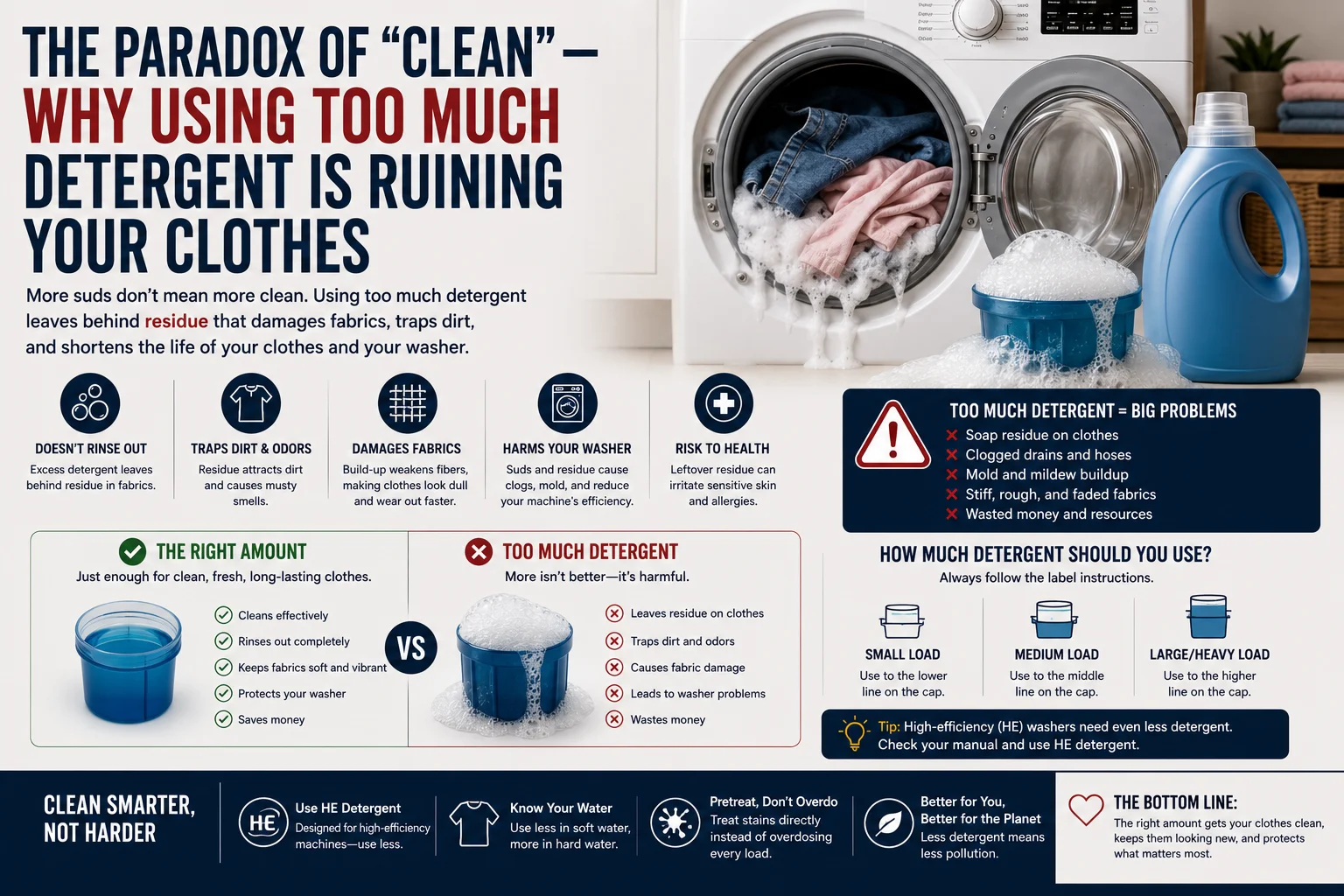
In the world of cleaning, we often fall victim to the “more is better” fallacy. If a little soap makes things clean, a lot of soap must make things spotless, right? Unfortunately, when it comes to modern laundry chemistry, this logic is not only wrong—it’s destructive. Using too much laundry detergent is one of the primary reasons clothes feel stiff, smell strange, and wear out long before their time.
The Science of the “Suds Lock”
To understand the problem, we need to look at how detergent works. Detergent molecules contain two ends: one that loves water (hydrophilic) and one that loves oil and dirt (hydrophobic). The goal is for the detergent to latch onto the dirt on your clothes and then “pull” it into the water to be rinsed away.
However, modern high-efficiency (HE) washing machines use significantly less water than the machines of twenty years ago. When you add too much detergent, you create an overabundance of suds. In an HE machine, these suds create a “cushion” between the clothes. Remember that laundry relies on mechanical action—clothes need to rub against each other to get clean. If they are floating on a cloud of bubbles, that friction is lost. This is called “Suds Lock,” and it results in clothes that come out of the wash nearly as dirty as they went in.
The Sticky Trap: Attracting More Dirt
The most ironic consequence of using too much soap is that it actually makes your clothes dirtier in the long run. Because modern machines use so little water, they are incapable of rinsing away excessive amounts of detergent. This leaves a microscopic, sticky residue on the fibers of your clothing.
This residue acts like a magnet for environmental dust, skin cells, and pet dander. Have you ever noticed that your favorite t-shirt feels slightly “tacky” or stiff after a wash? That is dried detergent. As you wear the garment, it attracts more soil, which then requires more soap to “clean,” creating a vicious cycle that eventually turns your vibrant clothes dull and grey.
The Biofilm and Machine Health
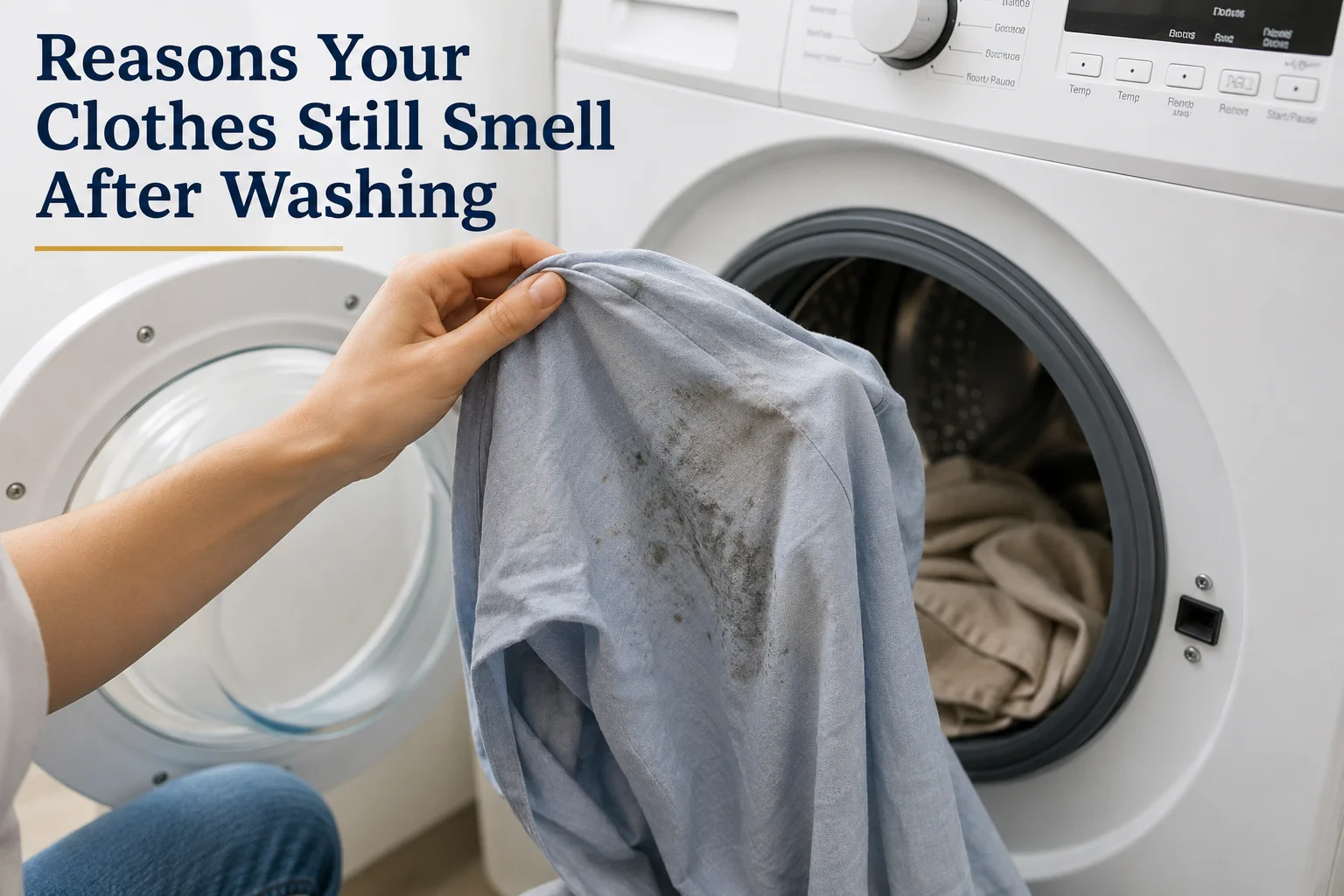
Excessive detergent doesn’t just stay on your clothes; it builds up inside your washing machine. The undissolved soap combines with minerals in your water and organic debris from your laundry to form biofilm—a slimy layer of bacteria and mold that lives in the outer drum of your washer.
If your washing machine has a “musty” smell that won’t go away, you are likely over-soaping. This biofilm can eventually lead to mechanical failure by clogging sensors or corroding the heating element. To keep things running smoothly, professionals suggest sticking to two tablespoons of high-quality detergent like Tide or Gain for a full load, and even less for sensitive skin formulas like Tide Free and Clear.