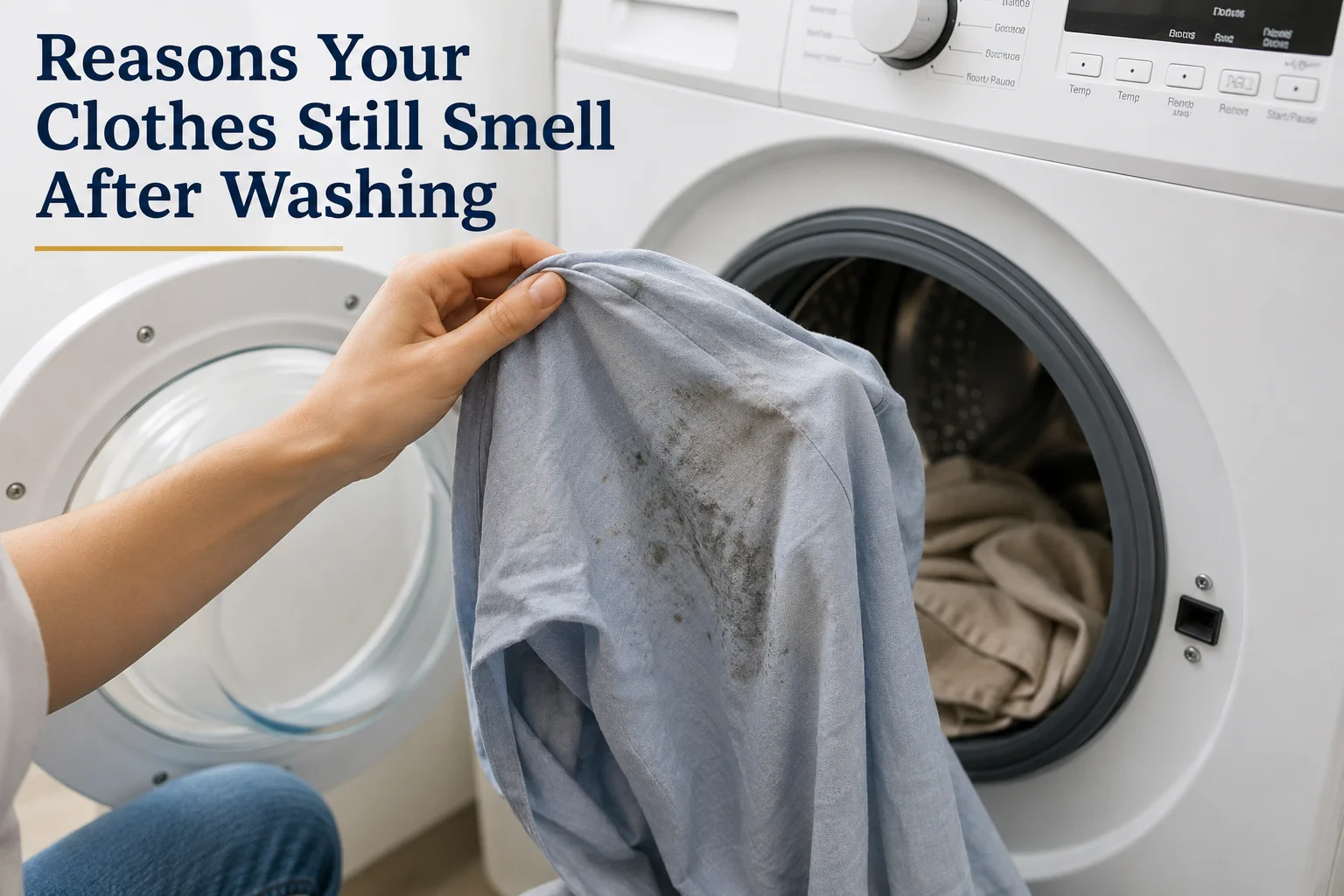
It starts innocently enough. You start a load of laundry at 9:00 PM, fully intending to move it to the dryer before bed. Then, a movie starts, or you fall asleep, and suddenly it’s 7:00 AM the next morning. While it seems like a minor inconvenience, leaving wet clothes in the machine is essentially inviting a microscopic colony to move into your closet.
The Biology of the “Sour” Smell
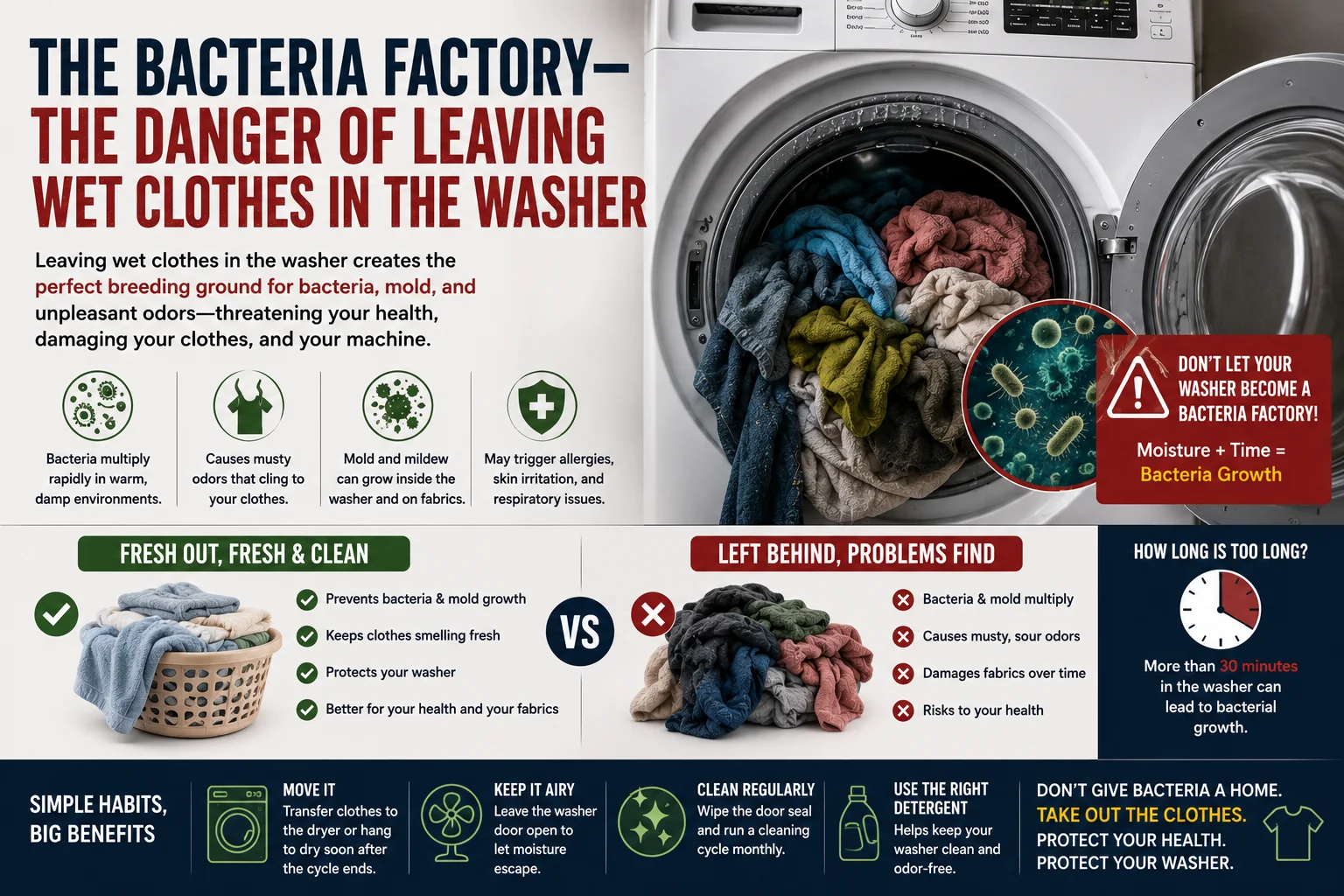
Your washing machine is not a sterile environment. Even after a cleaning cycle, there are trace amounts of bacteria and fungal spores present. When you leave wet clothes in the dark, warm, humid environment of a closed washer drum, you are providing the perfect “petri dish” for mildew and bacteria (specifically Moraxella osloensis) to thrive.
This bacteria is the primary cause of that “sour towel” or “wet dog” smell. Within as little as six to eight hours, these microbes can begin to multiply. The most frustrating part? Once these bacteria take hold, they produce a biofilm that is incredibly difficult to remove. Simply drying the clothes won’t kill the smell; in fact, the heat of the dryer can “bake” the odor into the fibers, making it a permanent part of the garment.
Fabric Degradation
The damage isn’t just olfactory; it’s structural. Mildew is a fungus that actually feeds on organic fibers like cotton, linen, and silk. If clothes are left damp for long periods repeatedly, the fibers begin to weaken and rot. This is why some older towels or shirts seem to develop holes for “no reason”—often, it’s the result of microscopic fungal damage over time.
Furthermore, leaving wet clothes sitting in a pile causes permanent creasing. The weight of the wet fabric presses deep wrinkles into the clothes that even a high-heat iron may struggle to remove. For synthetic fabrics, these “set” wrinkles can become a permanent feature of the garment’s shape.
The “Rescue” Protocol
If you realize you’ve left a load in the washer for more than 12 hours, do not just move them to the dryer. You must re-wash them. However, a standard detergent-only wash might not be enough to break through the bacterial biofilm.
Instead, run a “Rinse and Spin” or a short “Express” cycle using one cup of distilled white vinegar in the fabric softener compartment. The acetic acid in the vinegar is a natural disinfectant that kills the bacteria and neutralizes the odor without damaging the fabric. For heavy-duty items like towels, you can even add a half-cup of baking soda to the drum to help lift the scent.
Staying Ahead of the Clock
To prevent this, leverage technology. Most modern machines have a “Delay Start” feature. If you know you won’t be awake to move the laundry, set the machine to start two hours before you wake up. That way, the load finishes right as you’re pouring your morning coffee, and the clothes spend zero minutes sitting in a stagnant drum. Your nose—and your clothes—will thank you.