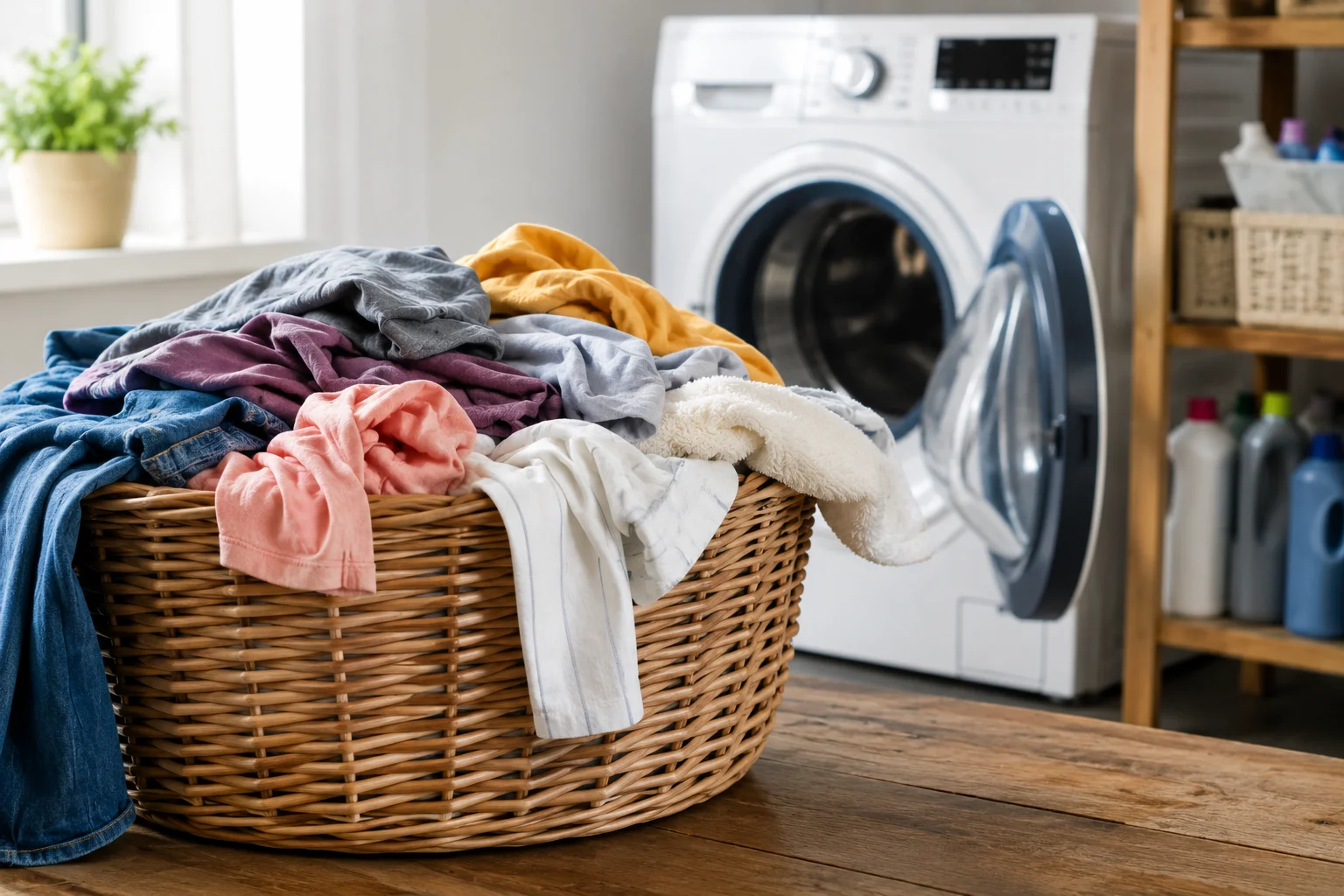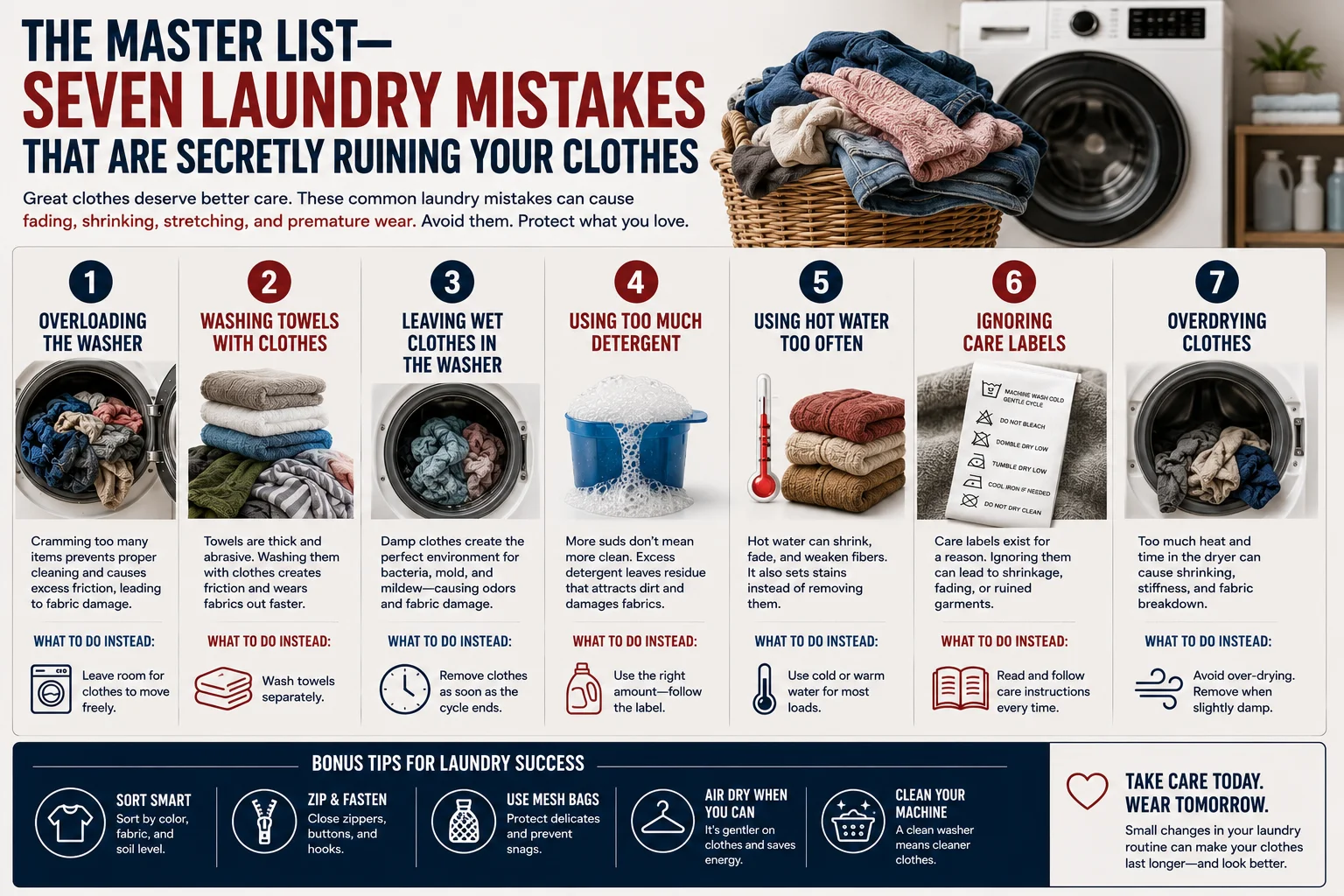
In the quest for a “quick load,” many people throw their bath towels in with their daily wear. It’s all cotton, right? Unfortunately, washing towels with clothes is a common laundry mistake because, in the world of textile science, towels and clothing are as different as sandpaper and silk. Washing them together is a recipe for premature aging, pilling, and a lint-covered wardrobe.
The Architecture of a Towel
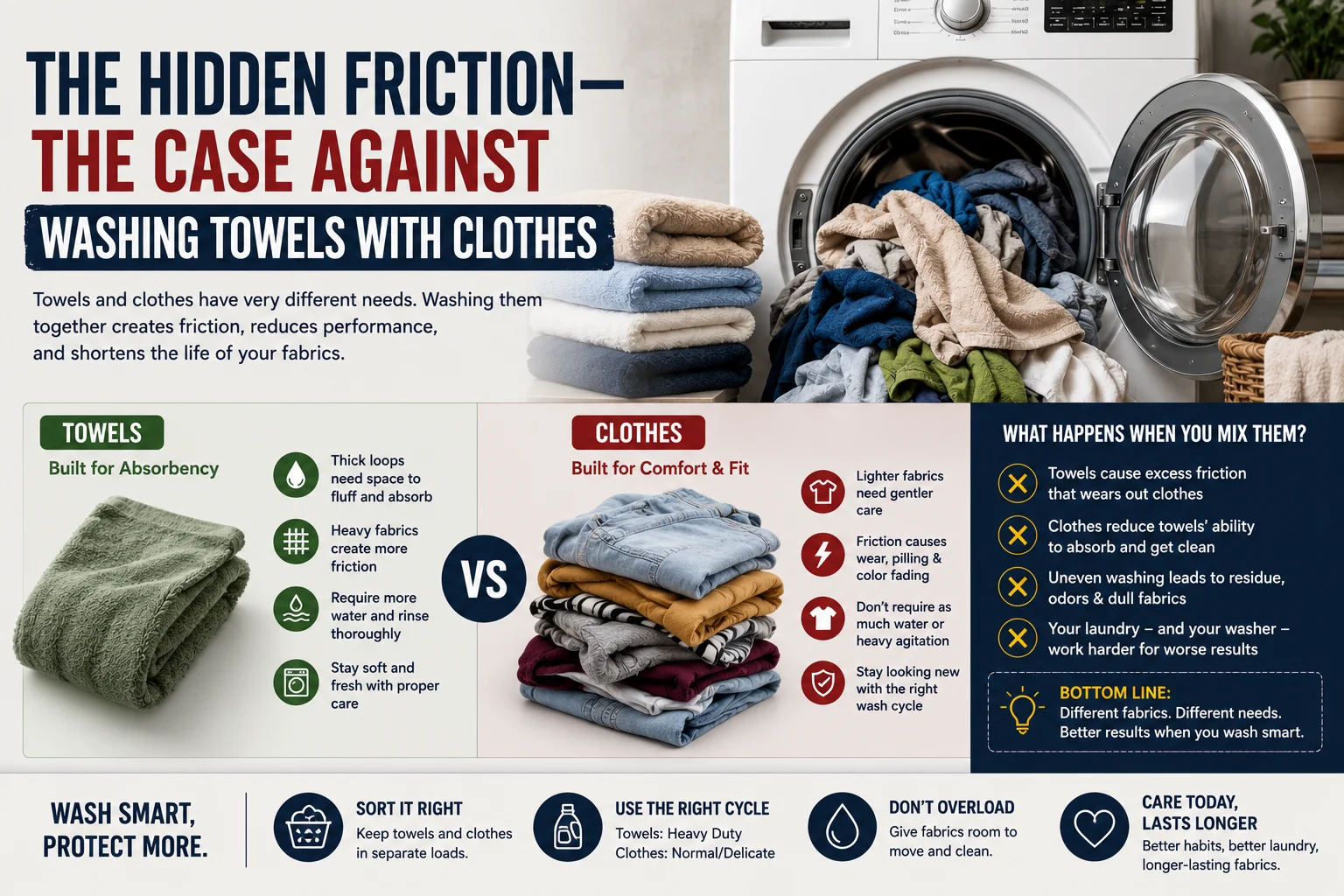
To understand the conflict, look at the physical structure of a towel. High-quality towels use terry cloth, which contains thousands of tiny loops of yarn. These loops maximize surface area for water absorption. However, the same loops also make the fabric incredibly heavy and abrasive when wet.
When you mix a heavy, abrasive towel with a delicate cotton t-shirt or a pair of synthetic leggings, the towel acts like a giant scrubbing pad. As the drum rotates, the heavy towel fibers rub against the smoother clothing fibers. This friction causes pilling—those tiny, annoying balls of fiber that appear on your sweaters and shirts. Once pilling starts, it’s almost impossible to reverse, and your “new” clothes suddenly look years old.
The Lint War
Towels are “lint-positive” fabrics. Because of their looped structure, they shed thousands of microfibers during every wash and dry cycle. Clothing, particularly synthetics or dark cottons, are “lint-magnets.” If you’ve ever wondered why your black yoga pants are covered in white fuzz, the culprit is likely a stray hand towel in the wash.
Even if you don’t see the lint immediately, it gets trapped in the weave of your clothing, making colors look dull and “ashy.” By separating your towels into their own dedicated load, you contain the lint to the towels themselves, which can then be easily captured by the dryer’s lint trap rather than your favorite blouse.
The Hygiene and Drying Dilemma
Beyond the physical damage, there is a hygiene issue. Towels are designed to hold onto moisture and organic material (skin cells and oils). They often require a more intensive wash cycle—longer durations or higher temperatures—to truly sanitize. Your clothes, conversely, need a gentler touch.
Furthermore, towels take significantly longer to dry than clothing. If you put them in the dryer together, you face two bad outcomes:
- You stop the dryer when the clothes are ready, leaving you with damp, “musty” towels.
- You run the dryer until the towels are dry, which means your clothes have been “over-cooked” for 20 minutes. Excessive heat in the dryer makes clothing fibers brittle, leading to shrinkage and holes.
The Professional Protocol
For a wardrobe that lasts, keep towels in their own category. Use a “Heavy Duty” or “Towels” setting for the linens, and a “Normal” or “Delicate” setting for your clothing. Your clothes will stay smoother, your towels will stay fluffier, and you’ll spend far less time with a lint roller in your hand.