
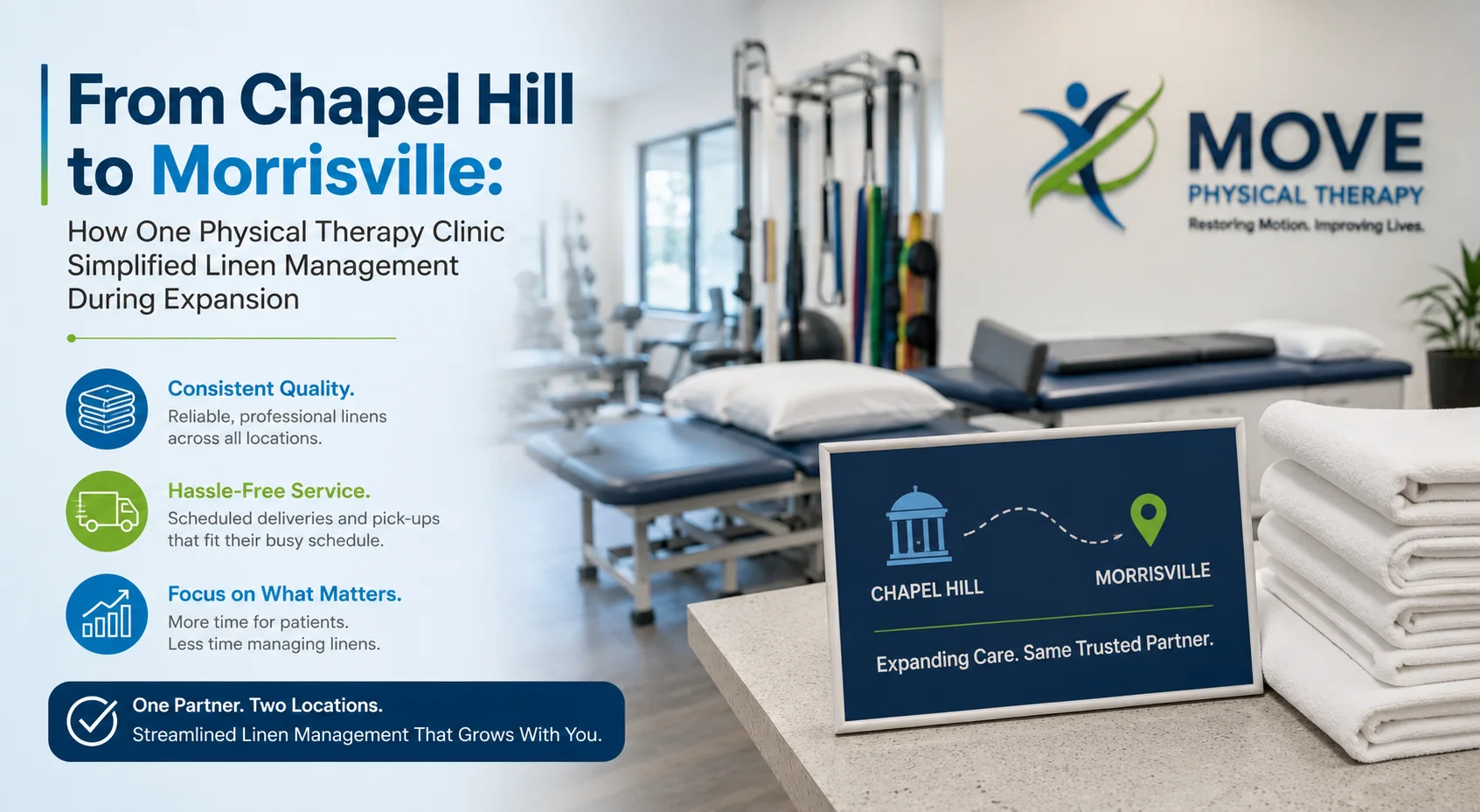
From Chapel Hill to Morrisville: How One Physical Therapy Clinic Simplified Linen Management During Expansion
When Growth Creates Unexpected Challenges

A Growing Practice Needed More Space
What Worked in One Location Didn’t Work in Two
- Monitoring washers and dryers
- Folding towels between appointments
- Tracking inventory levels
- Coordinating supplies between clinics
- Troubleshooting shortages
Small Problems Started Becoming Bigger Ones
The real challenge wasn’t dirty towels.
The challenge was unpredictability.
Some days the Chapel Hill location would need additional inventory.
Other days Morrisville would run through towels faster than expected.
Staff occasionally found themselves moving supplies between locations just to ensure enough clean inventory was available.
Nobody was in crisis mode.
Patients weren’t noticing a problem.
But internally, the team knew their process wasn’t sustainable.
The larger the practice became, the more time employees spent managing laundry logistics.
Jennifer started asking a simple question:
If we’re planning to grow, how much bigger does this problem become six months from now?
The answer wasn’t encouraging.
Looking Beyond the Obvious Solutions
The leadership team explored several options.
One suggestion was purchasing additional equipment.
Another was assigning laundry responsibilities to specific staff members.
Someone even proposed hiring part-time support.
Each solution addressed symptoms rather than the root cause.
More machines would still require oversight.
Additional staff would still need management.
Dedicated responsibilities would still pull employees away from higher-value work.
The clinic didn’t need a better laundry room.
It needed a better system.
Searching for a Scalable Solution
- Consistent pickup schedules
- Reliable turnaround times
- Professional cleaning standards
- Inventory predictability
- Inventory predictability
- Scalability for multiple locations
The Transition
Used towels and linens were collected at Chapel Hill and Morrisville according to a predetermined process.
- Pickup
- Washing
- Drying
- Folding
- Packging
- Delivery
- Laundry was no longer a recurring interruption.
- Therapists stayed focused on patient appointments.
- Front desk staff concentrated on scheduling and communication.
- Managers spent less time coordinating operational details.
- Most importantly, clean inventory was consistently available when needed.
- The process simply worked.
The Unexpected Benefits
What they didn’t anticipate was how many secondary benefits would emerge.
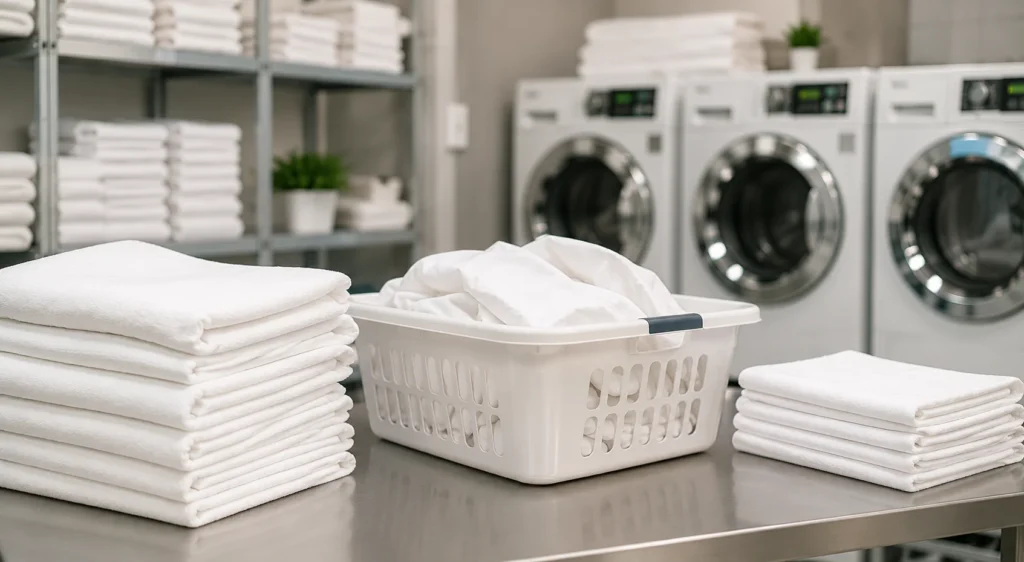
Improved Staff Productivity
The clinic experienced smoother daily workflows and fewer operational distractions.
Better Consistency Between Locations
After implementing pickup and delivery service, both locations operated under the same standardized process.
This created greater consistency throughout the organization.
Reduced Administrative Burden
As the business expanded, having reliable systems became increasingly valuable.

Improved Employee Satisfaction
Small frustrations disappeared.
Morale improved.
Six Months Later
A Common Challenge for Growing Healthcare Practices
- Peak Motion’s experience isn’t unique.
- Many healthcare providers successfully manage operational tasks internally during their early years.
- However, growth changes everything.
- Processes that work for one location often struggle under the demands of multiple facilities.
- Laundry may seem like a minor operational detail.
- In reality, it affects efficiency, employee productivity, inventory management, and ultimately the patient experience.
- For physical therapy clinics, rehabilitation centers, wellness practices, chiropractic offices, and healthcare providers throughout Chapel Hill, Morrisville, Durham, Cary, and the broader Triangle region, having dependable laundry systems becomes increasingly important as organizations expand.